








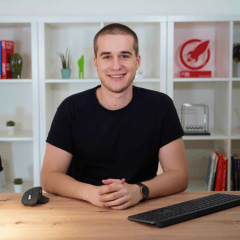
Hi, I’m Matteo, a Shopify Expert and Web Designer specialized in building, optimizing, and scaling high-performance eCommerce experiences. I’ve worked extensively with Shopify for several years, helping medium and large businesses design, develop, and grow their online stores with a strong focus on UX, performance, and conversion rate optimization. I’m currently ranked among the Top 10 Shopify Experts in Italy, and I collaborate daily with brands that need more than just a “nice-looking” store, they need a platform that truly supports their business goals. My experience covers: Custom Shopify theme development Advanced theme customization and UI/UX optimization Shopify app integrations and API-based solutions Store migrations and complex setups (B2C, B2B, multi-market) Ongoing optimization, performance improvements, and CRO
Shopify Workshops and Ecommerce Webinars
A workshop is the right buy when a whole team shares one problem at the same moment: a new returns process, a peak-season plan, a replatform, or a batch of Editions changes worth adopting. For one person's skill gap, one-to-one training is faster and cheaper. For ongoing advice, a coach fits better.
A good Shopify workshop is built from your store, not a slide deck, and it ends with decisions and named owners rather than a feedback form. Everyone should leave knowing which change is theirs and when it's due.
Three freelance workshop leaders list this service on shopexperts as of October 2026, based in the Netherlands, Italy and the United States. Compare them below, and send each the same short outline: team size, format and the decision the session must produce.

How to hire a workshop facilitator for your Shopify team
Name the outcome, not the topic. "A session on discounts" produces a tour of the discounts page. "Agree our peak-season discount rules and who sets each one up" produces a workshop. Put the decision you need in the first line of your brief.
Ask for the agenda and pre-work list before you agree a price. A facilitator who plans properly wants access, a sample of your data and attendees' questions in advance. One who quotes a full day without asking anything is selling a session they've already given elsewhere.
Check they can facilitate, not just present. Knowing Shopify well and running a room well are different skills. Ask how they handle a team that disagrees, how they keep quieter people involved, and what they do when an exercise breaks on a shared screen.
Ask what attendees will do with their hands. Hands-on time in the admin or a duplicate theme is what separates a workshop from a talk. If the agenda is mostly slides, book a webinar instead and pay less.
Sort out access a week before, not on the morning. A facilitator who is a Shopify Partner can request collaborator access using the 4-digit code from your admin, and the access starts once you approve the request. If nobody uses it for 90 days it lapses, so a session booked months ahead may need a fresh request. POS is out of reach for collaborator accounts, so retail-floor sessions run on your own devices with staff PINs.
Plan around the size of the provider. All three workshop leaders listed here work as freelancers. For a multi-day programme or several teams at once, ask who co-facilitates and who covers if the lead falls ill.
Walk away from promises about revenue, an app recommendation in every exercise, and an agenda with no follow-up plan after the day.
When a workshop beats one-to-one training, and how to make it stick
Workshops work for shared problems: a process that touches customer service and fulfilment, a peak-season plan, a replatform, or a set of Editions changes the team has to agree on. Individual skill gaps don't belong in a group room. Five people learning five different things together wastes most of everyone's day.
Design the session from your store, in three parts:
- Before: access sorted, data pulled and questions collected a week ahead, so the day starts at your real problem rather than the basics.
- During: hands-on exercises in a dev store or a duplicate theme, never the live theme, with a decision log kept on screen.
- After: every decision gets an owner and a date, and the recording and notes go somewhere the team will actually look.
Format follows the job. Webinars suit larger or remote groups and leave a recording people can rewatch. In-person half-days suit decisions, because disagreements get settled faster in a room than on a call.
Judge the workshop a month later, not on the day. The test is what the team now does differently — the new process in use, the peak-season plan built in the admin, the follow-ups closed. Attendance and feedback scores don't tell you that.
What does an ecommerce workshop cost?
Private workshops are priced by the half-day or full day, with travel on top for in-person sessions. Typical facilitator fees, plus starting prices published on shopexperts (October 2026):
Half-day workshop
$1,000 – $3,500
Facilitator fee, 3 to 4 hours
Full-day workshop
$1,500 – $5,000
Facilitator fee, 6 to 8 hours
Starting prices on shopexperts
$65 – $1,500
Median $100 across the 3 listed
Many of the directory figures are entry prices for a single short session, not a designed day. Custom design is usually built into the day rate, so question a separate preparation fee. Established corporate training firms charge $5,000 to $15,000 a day; for a store-specific session, a Shopify specialist is usually the better buy.
Public ecommerce workshop tickets typically cost $600 to $1,500 per attendee. For a team of four that's $2,400 to $6,000 for a session that isn't about your store, which is why a private half-day starts to make sense once three or more people need the same thing. Most teams get more from a tight half-day with proper pre-work than from a full day without it.
For a firm quote, send the head count, remote or in the room, the one decision the session must produce and the date it has to happen by.
What workshop leaders run for Shopify teams
Most private sessions fall into one of these formats:
Peak-season planning
Promotions, stock and staffing agreed and built in the admin before the rush
Replatform kick-off
Who owns what during a move to Shopify, and what changes for each team
Editions review
The few changes from each Shopify Edition worth adopting, tested on your store
Process redesign
Returns, fulfilment or customer service rebuilt with the people who run them
Team webinar series
Recorded sessions for remote or growing teams, one topic at a time
Masterclass or seminar talk
A one-to-many session for an event, partner day or staff conference
Frequently asked questions about team workshops and Shopify webinars
Shopify hosts its own webinars and AMAs in the Shopify Community, and recordings of past sessions live in Shopify Academy. They're useful for keeping up with what's new and how features work in general. They can't look at your settings, answer questions about your catalogue or settle a disagreement inside your team. Use Shopify's sessions for awareness, and pay for a private one when the team needs to decide or practise something on your own store.
As a shared starting point, sometimes. An ecommerce masterclass or seminar is one expert talking to many people, with little time spent in anyone's own store. That suits an event, a partner day or a team that needs common language. It rarely changes how your team works the following Monday. If the goal is a new process or a set of decisions, book a hands-on workshop and spend the masterclass budget there.
Check user seats first: Basic and Starter have no extra staff users at all, Grow stops at 5 and Advanced at 15, so a larger group may need to pair up or work in the facilitator's dev store. On Plus, every attendee can have their own login. Then confirm the room or video setup lets everyone see the admin clearly, because squinting at a shared screen kills hands-on work.
Only the parts you'll use. Each Edition, released every six months, carries a long list of updates, and most stores need a handful. A useful Editions session starts with the facilitator filtering the list against your store, then spends the time testing the shortlist in a duplicate theme and deciding who adopts what. A read-through of every update is a webinar, not a workshop.
One well-planned half-day handles a single decision or process. A replatform, or a team changing several workflows at once, usually needs a short series, with gaps between sessions so people can try things in the admin. Ask the facilitator to plan the second session at the end of the first, once they've seen where the team struggles.
The people who do the work and the person who can approve changes. Leave out anyone who would only observe; they slow decisions without adding to them. If the session changes a process that crosses teams, such as returns, bring one person from each team it touches, or the decisions won't hold once everyone is back at their desks.
'%20style='mix-blend-mode:plus-lighter'%3e%3cpath%20d='M293.421%2055.9546H463.536L701.016%20775.916H55.9546L293.421%2055.9546Z'%20fill='url(%23paint0_linear_0_18)'/%3e%3c/g%3e%3cdefs%3e%3cfilter%20id='filter0_f_0_18'%20x='0'%20y='0'%20width='756.971'%20height='831.87'%20filterUnits='userSpaceOnUse'%20color-interpolation-filters='sRGB'%3e%3cfeFlood%20flood-opacity='0'%20result='BackgroundImageFix'/%3e%3cfeBlend%20mode='normal'%20in='SourceGraphic'%20in2='BackgroundImageFix'%20result='shape'/%3e%3cfeGaussianBlur%20stdDeviation='27.9773'%20result='effect1_foregroundBlur_0_18'/%3e%3c/filter%3e%3clinearGradient%20id='paint0_linear_0_18'%20x1='360.25'%20y1='55.9546'%20x2='360.25'%20y2='739.522'%20gradientUnits='userSpaceOnUse'%3e%3cstop%20stop-color='%23818DBF'/%3e%3cstop%20offset='1'%20stop-color='%23818DBF'%20stop-opacity='0'/%3e%3c/linearGradient%3e%3c/defs%3e%3c/svg%3e)
'%20style='mix-blend-mode:plus-lighter'%3e%3cpath%20d='M27.9773%2027.9773H198.092L198.119%20747.938H27.9962L27.9773%2027.9773Z'%20fill='url(%23paint0_linear_0_16)'/%3e%3c/g%3e%3cdefs%3e%3cfilter%20id='filter0_f_0_16'%20x='0'%20y='0'%20width='226.096'%20height='775.916'%20filterUnits='userSpaceOnUse'%20color-interpolation-filters='sRGB'%3e%3cfeFlood%20flood-opacity='0'%20result='BackgroundImageFix'/%3e%3cfeBlend%20mode='normal'%20in='SourceGraphic'%20in2='BackgroundImageFix'%20result='shape'/%3e%3cfeGaussianBlur%20stdDeviation='13.9887'%20result='effect1_foregroundBlur_0_16'/%3e%3c/filter%3e%3clinearGradient%20id='paint0_linear_0_16'%20x1='94.807'%20y1='27.9773'%20x2='94.807'%20y2='711.545'%20gradientUnits='userSpaceOnUse'%3e%3cstop%20stop-color='%23818DBF'/%3e%3cstop%20offset='1'%20stop-color='%23818DBF'%20stop-opacity='0'/%3e%3c/linearGradient%3e%3c/defs%3e%3c/svg%3e)
'%20style='mix-blend-mode:plus-lighter'%3e%3cpath%20d='M558.852%2083.9319H728.967L1203.93%20803.893H83.9319L558.852%2083.9319Z'%20fill='url(%23paint0_linear_0_14)'/%3e%3c/g%3e%3cdefs%3e%3cfilter%20id='filter0_f_0_14'%20x='0'%20y='0'%20width='1287.86'%20height='887.825'%20filterUnits='userSpaceOnUse'%20color-interpolation-filters='sRGB'%3e%3cfeFlood%20flood-opacity='0'%20result='BackgroundImageFix'/%3e%3cfeBlend%20mode='normal'%20in='SourceGraphic'%20in2='BackgroundImageFix'%20result='shape'/%3e%3cfeGaussianBlur%20stdDeviation='41.966'%20result='effect1_foregroundBlur_0_14'/%3e%3c/filter%3e%3clinearGradient%20id='paint0_linear_0_14'%20x1='625.681'%20y1='83.9319'%20x2='625.681'%20y2='767.499'%20gradientUnits='userSpaceOnUse'%3e%3cstop%20stop-color='%23818DBF'/%3e%3cstop%20offset='1'%20stop-color='%23818DBF'%20stop-opacity='0'/%3e%3c/linearGradient%3e%3c/defs%3e%3c/svg%3e)

- Design, UX & Branding
- Shopify Development
- Store Setup & Management
- Consulting & Strategy
- Copywriting & Content
- Marketing & Growth
- AI & Emerging Tech
- Finance, Taxes & Compliance
- Operations, Logistics & Fulfillment
- Technical Support & Maintenance
- Training, Coaching & Support
- SEO (Search Engine Optimization)
- Check All Services