








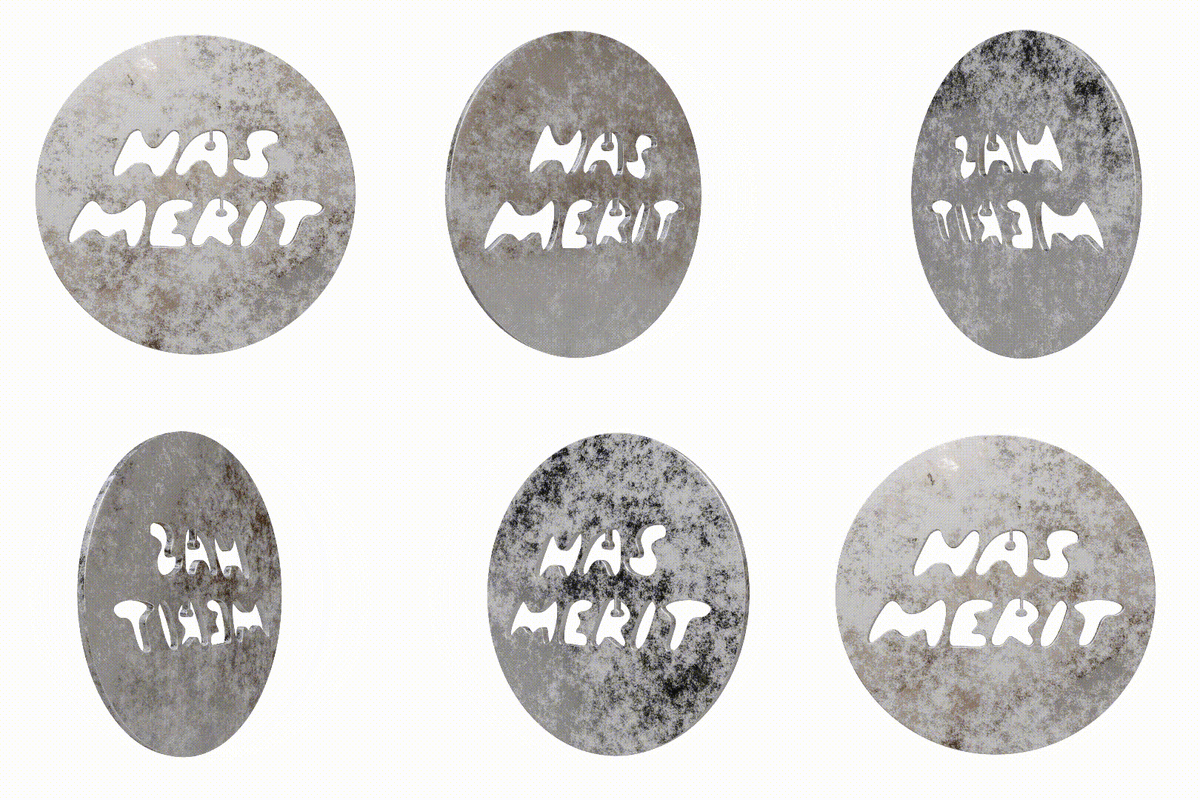
HAS MERIT is a studio crafting conversion-driven Shopify storefronts and building brands for ambitious companies. We design and develop polished sites that feel like real brands (not quick templates) and back them with brand identity systems that create lasting recognition. From strategy to branding to design to development, everything’s done in-house for a seamless process. We’re a great fit for brands seeking personalized brand design paired with thoughtful conversion strategy, without the agency fluff or freelance hit-or-miss. Building Digital Storefronts: Personalised Design - tailored layouts built to sell, not just look good. Custom Development - beyond just templates, crafted solutions for your brand. Conversion Optimisation - auditing and smarter UI/UX so you don’t leave money on the table. Brand & Identity Design - constructing a brand that stands out and connects. Seamless Integrations - payments, shipping, and tools connected without friction. We just helped an FMCG brand increase conversions by 56% and increased net sale by 86% within 30 days by tweaking their existing page. Female-founded by a designer/developer with experience across brands of all sizes, partnered with a commercial lead from top global CPGs and agencies, we blend design, strategy, and business insight to help brands stand out and scale. Our clients have been featured in Forbes, Vogue, Allure, mindbodygreen, Whole Foods and more
Shopify Branding Agencies and Brand Strategists
A brand problem usually shows up somewhere else first. Ads only work with a discount, customers describe you by your product rather than your name, or the store looks like three companies stitched together. Shopify branding specialists work on the layer underneath: who you're for, what you stand for and how you say it.
This is strategy work. It covers positioning, audience, naming, messaging, brand architecture, brand audits and full rebrands. It isn't logo and visual identity production, which follows the strategy and is a separate service, and it isn't store design, which applies the brand to your theme.
For DTC brands selling mainly through their own store, the brand does the job a retail shelf or a marketplace listing would otherwise do. As of September 2026, 22 branding specialists are listed on shopexperts, 17 agencies and 5 freelancers, mostly in the US, UK and Canada. Compare them below, or request a quote with a note on where your brand stands today.



Choosing a brand strategy agency for an ecommerce brand
Ask what they'll learn before they design anything. A strategy engagement should start with customer interviews, a read through your product reviews and support tickets, and a look at the competitors your customers actually compare you with. If the proposal opens with mood boards, you're buying identity work with a strategy label on it.
Look for ecommerce brands they've taken past launch. Plenty of branding studios do beautiful work for restaurants and property developers. Ecommerce branding has to survive a square product thumbnail, a paid social ad and a shipping box. Ask how a past client's positioning shows up on its product pages and emails, not just in the brand book.
Get the deliverables named. "Brand strategy" can mean a two-page positioning statement or a 60-page platform with audience profiles, messaging hierarchy, tone of voice and naming conventions. Agree which you're paying for. Most smaller Shopify brands need the two-page version and a messaging guide, not the platform.
Check who owns the follow-through. Strategy nobody applies ends up in a shared drive. Ask whether the agency also delivers identity and store application, or hands over to your designer and copywriter, and what that handover contains.
Ask how the positioning gets tested. A new message can be checked cheaply before anything is redesigned: fresh headlines in paid social, a reworded homepage hero, a post-purchase survey question. An agency that proposes a test before a full rollout is thinking like an operator.
Red flags. A rebranding agency that suggests a new name in the first meeting. Strategy decks that could describe any brand in your category. And no mention of your existing customers, who are the people most likely to notice a change and object to it.
Refresh, rebrand or reposition: which job you actually need
These are three different jobs with very different price tags, and brands regularly buy the biggest one when they needed the smallest.
Refresh. Your positioning still works but the execution has drifted: colours that don't match between store and packaging, tired photography, a typeface that looked current five years ago. A refresh tidies the identity without changing what you stand for. Customers barely notice, which is the point.
Reposition. The brand looks fine, but you're talking to the wrong people or saying the wrong thing. Typical signs: you've moved upmarket and the messaging hasn't, or a new audience has overtaken your original one. Repositioning changes strategy and messaging first, and the visuals may barely move.
Rebrand. Both strategy and identity no longer fit, often after a pivot, a merger, a trademark conflict or a product line the old name can't stretch to. This is the expensive one. On Shopify it touches everything from the theme and email templates to packaging, social handles and possibly your domain.
The logo test. Cover the logo on your homepage, a product page and a recent social post. Would a regular customer still know it's you? If yes, you have equity worth keeping, and a refresh or reposition is probably enough. If no, the brand isn't doing its job, and a rebrand is at least worth pricing.
How much do ecommerce branding services cost?
Branding prices vary more than almost any other design service, because the same word covers a one-day workshop and a year-long programme. Typical market ranges:
Brand audit
$1,000 – $4,000
Settles rebrand vs refresh before you commit
Brand strategy
$5,000 – $40,000
Positioning, messaging, architecture
Full rebrand
$25,000 – $120,000
Strategy, identity and store application
A full rebrand with identity and theme application typically takes 12-20 weeks. Three things move the price most: research depth, since every customer interview takes time; naming, which adds trademark screening; and the number of touchpoints to apply it to, from the store and emails to packaging and wholesale materials.
On shopexperts, 21 of the 22 branding specialists publish a starting price, from $50 to $5,000, with a median of $500 (September 2026). Those are the lowest listed prices, not rebrand quotes. Send your current brand assets and what's prompting the change to get a quote.
What does a Shopify branding agency do?
Strategy engagements pick from these, and the audit usually comes first:
Brand audit
Where the brand is inconsistent, dated or off-strategy
Positioning and audience
Who you're for, and why they should choose you
Messaging and tone of voice
Value propositions, taglines and writing rules
Naming and brand architecture
Brand, sub-brand and product line naming
Rebrand rollout planning
Sequencing changes across store, packaging, email and ads
Creative briefs
Strategy translated into briefs for designers and writers
Frequently asked questions about DTC branding
It's brand work for companies that sell direct to consumers, mostly through their own store rather than retailers or marketplaces. Without a shelf, a salesperson or a retailer's reputation helping, the brand has to justify the price, earn the repeat order and give people a reason to recommend you. On Shopify, that means product pages, emails, packaging and the unboxing carry the brand as much as the logo does.
A freelance strategist suits a focused job, such as a positioning sprint or a messaging guide, especially if design will be handled separately. An ecommerce branding agency makes more sense for a full rebrand, where research, strategy, identity and rollout need to stay connected and one team keeps the brief from getting lost between suppliers. Whichever you choose, meet the person who will run the customer interviews, not only the one who pitched.
Usually later than founders think. Before launch you don't yet know who buys and why, so heavy strategy work rests on guesses. Better moments: once you have enough customers to interview, before a big step up in paid spend, before you move into wholesale or retail, and when growth stalls despite a good product. A light positioning exercise at launch is fine. Save the full programme for when there's evidence to build on.
A visual rebrand on its own doesn't, as long as URLs and on-page content stay in place. The risk comes with a new name and a new domain. If you change domains, keep the old one connected to Shopify, set the new one as primary so traffic redirects, and update page titles and meta descriptions that carry the old name. Expect some movement for a few weeks after a domain change, and don't schedule it for peak season.
Ideally, yes. A logo is visual shorthand for a position, and designing it before you've settled the position is how brands end up with a mark that looks fine and says nothing. For a new store on a tight budget, a short positioning workshop followed by identity work is a sensible compromise. The identity designer then works from a clear brief, and you avoid paying for a second logo a year later.
Why now, and what isn't working. What must stay, such as a colour or name customers recognise. Who you want to sell to next, not only who buys today. The competitors customers actually compare you with. Every touchpoint that needs updating: store, email templates, packaging, social, wholesale materials. And a timeline tied to your packaging reorder, so you don't launch a new brand with six months of old boxes in the warehouse.
'%20style='mix-blend-mode:plus-lighter'%3e%3cpath%20d='M293.421%2055.9546H463.536L701.016%20775.916H55.9546L293.421%2055.9546Z'%20fill='url(%23paint0_linear_0_18)'/%3e%3c/g%3e%3cdefs%3e%3cfilter%20id='filter0_f_0_18'%20x='0'%20y='0'%20width='756.971'%20height='831.87'%20filterUnits='userSpaceOnUse'%20color-interpolation-filters='sRGB'%3e%3cfeFlood%20flood-opacity='0'%20result='BackgroundImageFix'/%3e%3cfeBlend%20mode='normal'%20in='SourceGraphic'%20in2='BackgroundImageFix'%20result='shape'/%3e%3cfeGaussianBlur%20stdDeviation='27.9773'%20result='effect1_foregroundBlur_0_18'/%3e%3c/filter%3e%3clinearGradient%20id='paint0_linear_0_18'%20x1='360.25'%20y1='55.9546'%20x2='360.25'%20y2='739.522'%20gradientUnits='userSpaceOnUse'%3e%3cstop%20stop-color='%23818DBF'/%3e%3cstop%20offset='1'%20stop-color='%23818DBF'%20stop-opacity='0'/%3e%3c/linearGradient%3e%3c/defs%3e%3c/svg%3e)
'%20style='mix-blend-mode:plus-lighter'%3e%3cpath%20d='M27.9773%2027.9773H198.092L198.119%20747.938H27.9962L27.9773%2027.9773Z'%20fill='url(%23paint0_linear_0_16)'/%3e%3c/g%3e%3cdefs%3e%3cfilter%20id='filter0_f_0_16'%20x='0'%20y='0'%20width='226.096'%20height='775.916'%20filterUnits='userSpaceOnUse'%20color-interpolation-filters='sRGB'%3e%3cfeFlood%20flood-opacity='0'%20result='BackgroundImageFix'/%3e%3cfeBlend%20mode='normal'%20in='SourceGraphic'%20in2='BackgroundImageFix'%20result='shape'/%3e%3cfeGaussianBlur%20stdDeviation='13.9887'%20result='effect1_foregroundBlur_0_16'/%3e%3c/filter%3e%3clinearGradient%20id='paint0_linear_0_16'%20x1='94.807'%20y1='27.9773'%20x2='94.807'%20y2='711.545'%20gradientUnits='userSpaceOnUse'%3e%3cstop%20stop-color='%23818DBF'/%3e%3cstop%20offset='1'%20stop-color='%23818DBF'%20stop-opacity='0'/%3e%3c/linearGradient%3e%3c/defs%3e%3c/svg%3e)
'%20style='mix-blend-mode:plus-lighter'%3e%3cpath%20d='M558.852%2083.9319H728.967L1203.93%20803.893H83.9319L558.852%2083.9319Z'%20fill='url(%23paint0_linear_0_14)'/%3e%3c/g%3e%3cdefs%3e%3cfilter%20id='filter0_f_0_14'%20x='0'%20y='0'%20width='1287.86'%20height='887.825'%20filterUnits='userSpaceOnUse'%20color-interpolation-filters='sRGB'%3e%3cfeFlood%20flood-opacity='0'%20result='BackgroundImageFix'/%3e%3cfeBlend%20mode='normal'%20in='SourceGraphic'%20in2='BackgroundImageFix'%20result='shape'/%3e%3cfeGaussianBlur%20stdDeviation='41.966'%20result='effect1_foregroundBlur_0_14'/%3e%3c/filter%3e%3clinearGradient%20id='paint0_linear_0_14'%20x1='625.681'%20y1='83.9319'%20x2='625.681'%20y2='767.499'%20gradientUnits='userSpaceOnUse'%3e%3cstop%20stop-color='%23818DBF'/%3e%3cstop%20offset='1'%20stop-color='%23818DBF'%20stop-opacity='0'/%3e%3c/linearGradient%3e%3c/defs%3e%3c/svg%3e)

- Design, UX & Branding
- Shopify Development
- Store Setup & Management
- Consulting & Strategy
- Copywriting & Content
- Marketing & Growth
- AI & Emerging Tech
- Finance, Taxes & Compliance
- Operations, Logistics & Fulfillment
- Technical Support & Maintenance
- Training, Coaching & Support
- SEO (Search Engine Optimization)
- Check All Services